


South Australia is home to most of the better known and important wine regions of Australia. This is where you will find Coonawarra, Padthaway, McLaren Vale, and Barossa to name a few. This is also where you will find the Riverlands, the source of many entry level and boxed wine labels. Between the highs and the lows the region produces about half of the wine of Australia.
Many of the country’s iconic wines come from South Australia including Henschke Hill of Grace and Penfold’s Grange. Well known labels such as Jacob’s Creek and Hardy’s got their start in this region. The oldest family-owned winery in Australia is Yalumba, with first vines planted in 1849, located in the Barossa Valley wine region.
The city of Adelaide is surrounded by most of the main growing regions of South Australia. Coonawarra region and the Limestone Coast zone are off the bottom right edge of the map. The Lower Murray (Riverlands) zone is not marked on the map, but lies to the right of and below the Eden Valley region. Despite the relative proximity of these regions, they are quite diverse in their terroir: soils, micro-climate, and growing conditions.
Coonawarra is defined by its terra rossa (red) soils and a Bordeaux-like coastal climate and is recognized for its Cabernet Sauvignon based wines. McLaren Vale has a Mediterranean climate, free-draining mixed soils, and is best known for Shiraz. Eden Valley is more than 400 meters above sea level and is cooler and wetter than surrounding regions.
The Barossa Valley has a continental climate with lots of summer heat, low rainfall during the growing season, and a high diurnal swing between day and night temperatures. Many vineyards are irrigated, but some of the oldest vines and vineyards are dry-farmed, producing highly concentrated grapes. The Valley’s heat was ideal for Shiraz and producing very ripe grapes to go into the fortified wines of the early Australian wine industry. Interest in those types of wines has moved to wines of character made from very old Shiraz vines (some as much as 170 years old).
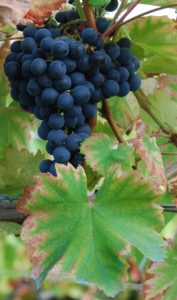
Although Barossa is best known for Shiraz, other varieties are grown including red varietals Grenache, Mataro (Mourvedre), and Cabernet Sauvignon. On the cooler hillsides and higher elevations white varieties include Chardonnay, Semillon, and Riesling. Barossa Shiraz wines are known for their full-bodied, spicy, and mocha characteristics.
GSM (Grenache, Syrah, Mourvedre) based wines are a common blend in the southern Rhône region of France. Australia and Barossa produce a similar style of wine with the same grapes, albeit under different names: Grenache, Shiraz (Syrah), and Mataro (Mourvedre). Grenache contributes fruit and alcohol, Shiraz adds tannin, colour, and black fruit. Mataro finishes the blend with more colour, acidity, and plum fruit. This is a blend that works and is very much in my favour.
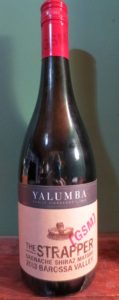
The Yalumba “The Strapper” GSM 2013, Barossa Valley is one such wine and is a new listing at the NLC ($26.36). The colour is red-black with purple highlights. The abundant aroma shows sweet black cherry and black currant fruit accented with molasses or tar, chocolate, and smoke. Medium to full body in the mouth it has good structure with firm acidity and smooth tannins – drinking well right now – with some heat from the 14% alcohol. Medium length in the finish, this wine is best enjoyed with food. Score: 16/Very Good.
 “Under the Tuscan Sun”
Dialog Wines is hosting a wine tasting and dinner at Piatto’s downtown location on Wednesday, April 26, 6:30 PM. Call 726-0909 to reserve a spot. $34.99 per person.

We enjoyed our last virtual tasting so much we had to do it again – a great excuse to pull out some wines a little more special than normal, particularly the sweets, which are rare without (real) company. And then we combine this with a chat about the wines (and other things) with our wine […]
Read More
We had been interested in setting a date for a dinner and tasting with our two close-by friends, but it was derailed by the recent omicron surge! Instead, we arranged to dine separately, but using the same wine selection, and then connect on Zoom over the dessert wine and discuss the wines, and the match […]
Read More
Steve Delaney
April 20, 2017
Australia
No Comment