
Bordeaux is arguably the best wine producing region in the world, and some of its top wines command near outrageous prices even if you have a chance to buy them. The best wines offer depth and complexity of flavour, great structure, and the ability to evolve in tastes over a long bottled life.

A rather distinct feature of Bordeaux and its top-end wines is the means by which these great wines are sold. Almost all the production is purchased by “negotiants” while it is still being aged in barrels prior to bottling. Firms such as Nathaniel Johnston and Schroder and Schyler having purchased portions of production from many châteaux then set out to sell all that wine around the globe. If you visit one of the great houses such as Château Pichon Longueville Baron (by pre-arranged appointment of course) you may find it strange that they have no wine to sell you – except for their special reserves, it has pretty much all left the premises.
For the châteaux owners the great benefit of the system is that they are paid for the bulk of their production before it is even ready to bottle, let alone ready to drink. Many a vineyard operation around the world is sitting on multiple vintages of unsold wine, and wishing for the cash to fund next year’s harvest and improvements. The reinvestment in operations enabled by this system has multiplied over hundreds of years propelling Bordeaux wines to the highest levels of quality and recognition.
Even before the negotiants have the wine, they are working on selling it. While the current vintage is finishing fermentation and spending its first few months in barrel, assessments of the quality of the vintage and individual wines are being made. Market factors are also being considered in order to set the price for the first offering of the wines. That first offering is called “En Primeur” and is also referred to as “Futures”. Just like the châteaux selling the unfinished wine to negociants, the negociants turn around and sell to consumers via futures. The negociants can’t afford to keep their large investments of cash in warehouses. The best price you are likely to see for these top-end wines is through futures, after which the supply of such wines is reduced and the demand tends to grow, especially for the best vintages.
NLC Event
For many years it was very difficult for wine lovers in this province to participate in and gain the benefits of futures offerings. More recently, the NLC has been making futures available, and will do so again this year. On June 16th at the Capital Hotel you will be able to taste barrel samples and place futures orders (for delivery in two to three years). Even if you are not interested in such purchases, the event is a unique opportunity to sample great wines in the early stages of their development – an interesting learning experience at the very least.
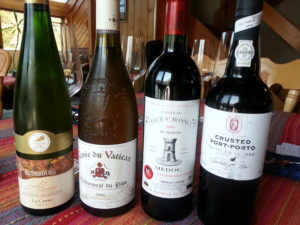
The Opimian Society has offered futures from time to time, when the quality of a particular vintage and the dynamics of the market have made prices particularly attractive. I’ve taken advantage of some of those offerings without any regret. My most recent example is this past weekend, noting the picture of the line up of wines for a BBQ with friends.
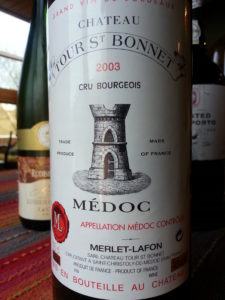
The third wine from the left is a Château Tour St. Bonnet 2003, Medoc, Cru Bourgeois, purchased via futures. The wine is an excellent example of a very good Bordeaux which does not have the name recognition of the bigger labels. Layers of dried fruit and red fruit flavours are mixed with subtle touches of cedar and vanilla with a supple, elegant structure. I am lucky to have a couple of bottles left, and will drink them very soon while the wine is at its peak.
Seems reasonable to suggest that if you do buy futures, not only will you be required to wait a couple of years for delivery, but you would be well advised to plan on waiting a few more years before starting to drink them!
Perhaps I will see you at the event!

We enjoyed our last virtual tasting so much we had to do it again – a great excuse to pull out some wines a little more special than normal, particularly the sweets, which are rare without (real) company. And then we combine this with a chat about the wines (and other things) with our wine […]
Read More
Wonderful selection of wines you shared with your friends!
Is there not a movement afoot in Bordeaux to skip the En Primeur process and directly market the wine still in barrel to the marketplace bypassing the negotiant?
Latour has started down the road of marketing its own wine rather than sell to negociants. They probably have the financial capacity to not sell anything for several years while they await the bottling of their recent vintages. Some places like Latour realized they were not getting the benefits of the large price increases over time that their wines might enjoy. We will see how it works out for them and how many others may follow that lead.