

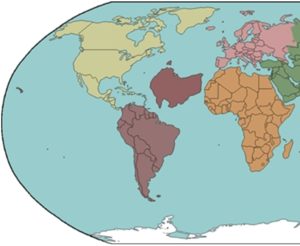
It’s early summer in Australia right now, and daytime highs across most of the continent will be in the 30s or high 20s. By any measure the country is a much warmer place than our province. If Australia was in the North Atlantic, it would be centred on a line between the Bahamas and Western Sahara, and its most northerly point would be around Boston. Images of a hot and dusty Outback, or tropical forests, reinforce these facts.
So it is a warm place, and a lot of the wine from Australia reflects that – such as big ripe red wines made from Cabernet Sauvignon or Shiraz. Yet we see many wines from Australia that are typically “cool climate” such as Pinot Noir and Riesling. How can this be? The answer lies in altitude and ocean exposure.
Some of the more recently designated wine regions in New South Wales, such as Orange and South Highlands, range in altitude from 500 m to 1000 m. High Eden Valley in South Australia’s Barossa is also at about 500 m. Tropical Queensland boasts the South Burnett (500 m) and Granite Belt (1000 m) regions. You can get hot daytime conditions in such places, but the higher vineyards tend to cool off overnight, allowing the vines to “rest” and slowing the metabolic processes of ripening.
Regions such as Great Southern, Margaret River, and Tasmania have considerable exposure to cool breezes from the Southern and Indian oceans. The Margaret River area, jutting westward into the Indian Ocean at the south-west tip of the continent, is the coolest wine region in Australia with an annual mean temperature of only 7.6° C.
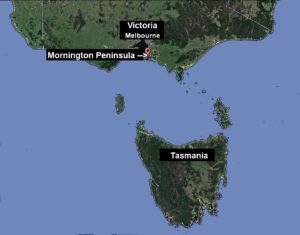
Just an hour’s drive south of Melbourne, due north of Tasmania across the Bass Strait, is the Mornington Peninsula – another ocean-influenced cool climate wine region. I spent a day last year visiting wineries in the area. The wineries we visited were generally small in production, although not necessarily in pricing. Many of the buildings and grounds showed significant capital investment, and for the most part it was echoed in the quality of the wines produced. Many places included restaurants and a few had accommodations – tourism was definitely a part of the economics of most of these wineries. Our visits included Crittenden Estate, Polperro, and Port Phillip Estate. Perhaps the most impressive wines were at Yabby Lakes, the winner of the 2013 Jimmy Watson award for the best wine in Australia.
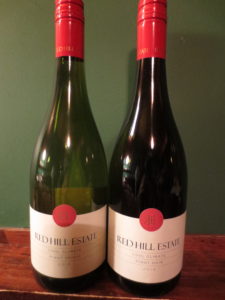
One of the places we missed was Red Hill Estate, and so I was pleasantly surprised to walk into the NLC recently and see two wines from the winery on display for tasting!
The Pinot Grigio (NLC $25.53) shows an abundant aroma of citrus and sweet apple and is supported by fresh, lively acidity. It should pair well with seafood dishes.
The Pinot Noir (NLC $25.53) has scored highly in some reviews and deservedly so. Good acidity, silky tannins, and sweet cherry fruit with some tasty accents combine for an excellent value wine. This is one a Pinot Noir fan needs to try.
There seems to be an increasing differentiation of the NLC’s Australian wine selection based on regions, as opposed to generic wines – a good thing!
Wine, Cheese, and Chocolate!
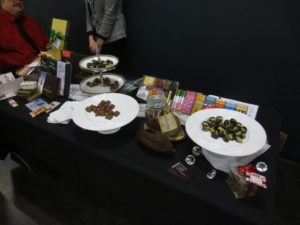
In early December the Conception Bay Area Chamber of Commerce held a fund-raising event for the food bank and its scholarship fund. The event featured pairings of cheese-based dishes, and chocolate, with various wines, lead by Tom Beckett. The event was very well done and it was obvious a lot of effort was involved in the organization.

We enjoyed our last virtual tasting so much we had to do it again – a great excuse to pull out some wines a little more special than normal, particularly the sweets, which are rare without (real) company. And then we combine this with a chat about the wines (and other things) with our wine […]
Read More
We had been interested in setting a date for a dinner and tasting with our two close-by friends, but it was derailed by the recent omicron surge! Instead, we arranged to dine separately, but using the same wine selection, and then connect on Zoom over the dessert wine and discuss the wines, and the match […]
Read More
January 14 menu item ‘on the hop’ at the top of the article!