

More than a dozen years ago I tried my first white wine from Québec – I was not impressed. I recently had the chance to visit four wineries in the Eastern Townships and I can report that things have changed for the better.
I enjoyed samples from several categories – sparkling, white, rosé, and sweet. Red is likely to remain a challenge as more heat and/or a longer growing season is required to ripen the more interesting varieties. The region has certainly benefitted from climate change as the growing season has been extended and deepened, improving ripening conditions.
Domaine Bergeville
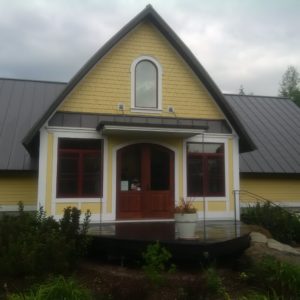
At Domaine Bergeville it was pointed out that the growing season and conditions are very similar to those in Champagne in France as of 20 years ago. The soils also contain a lot of limestone and shale, just like Champagne. The vineyards face the south-west, overlooking the local lake, to take full advantage of whatever heat the growing season can offer. The winters are another story entirely, so they use a selection of hybrid varieties to avoid the need for burying the vines to survive the deep freezes.
They have, almost naturally, specialized in sparkling wines made in the traditional method. This makes sense on several levels. Competing on the open market in the huge category of dry, still wines is very competitive in both quality and price. Sparkling wines, although more expensive to make, also tend to command higher prices in the market. Sparkling wines are not as dependent on achieving perfect fruit ripeness, and are often picked early anyway to assure good acidity.And if you have any worries about uncommon aromas or tastes from hybrid varieties, sparkling wines provide good cover.
The Domaine makes good use of automation in the otherwise labour intensive production using the traditional method. It seems like the 15,000 bottles per year are produced by just a handful of people! The winery design and layout takes advantage of gravity for filling tanks and reducing oxidation, so very low sulfer levels are maintained in the wines. The winery also uses the below freezing conditions of winter to cool the cellar and conduct the cold stabilization process which removes tartaric acid crystals from the fermented product.
The Rosé is a blend of two varieties: Radisson and Frontenac Gris. The colour was a coppery hue (as pictured at the top of this page). In the glass it produced a plentiful, fine mousse with strawberry and red currant aromatics which carry through into the mouth. At $32 for a bottle (case discounts are available), this wine earned a 15.5/Very Good rating from me.
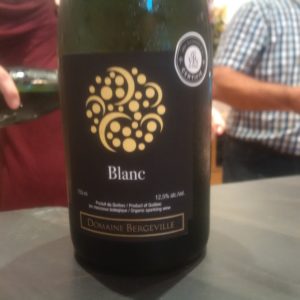
The Blanc is made from three varieties, l’Acadie Blanc, Frontenac Blanc, and St. Pepin. The wine is aged two years on its lees before release which shows in the complexity of the aroma, which is an apple/citrus mix. There is a plentiful, soft mousse and good acidity. Price: $30. Score: 15.5/Very Good.
Domaine Bergeville also produces a red bubbly made from Marquette and Frontenac Noir (not tasted), priced at $34. The winery is certified organic and biodynamic. Wines are available in fine restaurants in Montreal, at the winery, and through online orders in cases of six, including mixed cases.
Val Caudalies
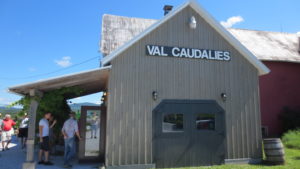
Another stop on my quick tour was Val Caudalies, which has been producing wine since 2008. It was originally the site of an apple orchard, and retains 800 apple trees and makes various cider products. They now produce 40,000 bottles of wine and cider products each year, and have more than 50,000 visitors! They have had to start renting additional vineyards to meet rising demand. Pretty much their entire production is sold on site. My tasting notes follow:
Vidal 2015 – nose typical of the varietal with floral and citrus, racy acidity, stone fruit flavours – Score: 15/Very Good.
Rosé 2015 – made from Maréchal foch, Lucie Kuhlmann, Chambourcin, de Chaunac, and Seyval Noir and showing strawberry fruit aromas and flavours, good acidity, nicely dry – Score: 14/Good.
Rouge 2015 – made from Frontenac and Marquette, producing aromas of smoke and cherry, quite light and fruity – Score: 13.5/Good.
Sparkling Cider (with 10% Raspberry juice) – evident raspberry with apple background in the aroma, dry, easy to drink – Score: 15/Very Good.
Liquereux Cider – made juice reduced 30% by volume by freezing; fresh, nice tartness and acidity, semi-sweet, quite delicious – Score: 15/Very Good.
Late Harvest Vidal – harvested after the first frost showing apricot, peach, orange peel, and honey; as good as similar products from anywhere in Canada – Score: 16/Very Good.
Ice Cider – made from pressings of frozen apples and a smaller part of juice reduced 70% in volume by freezing; sweet, spicy apple syrup aroma and mouth, tart acidity, lovely – Score: 15/Very Good.
Vermouth – a real surprise, made by macerating a secret mixture of herbs, fruits, flowers, and spices in grain alcohol for six weeks, and then adding the aromatized alcohol to white wine; intriguing, complex aromas and quite smooth on the tongue! Try it if you can find it!
Next Week: Part 2 – Christian Barthomeuf: Québec wine innovator

We had been interested in setting a date for a dinner and tasting with our two close-by friends, but it was derailed by the recent omicron surge! Instead, we arranged to dine separately, but using the same wine selection, and then connect on Zoom over the dessert wine and discuss the wines, and the match […]
Read More
Steve Delaney
August 31, 2016
Canada
No Comment