

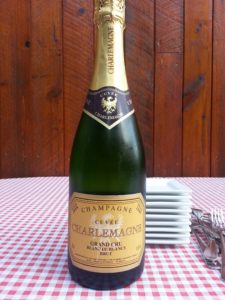
Drinking sparkling wine in these parts, especially Champagne, is often reserved for special occasions – New Year’s Eve and weddings for example. The less expensive bottlings, however, are increasingly popular as summer-time drinks – the nicely chilled fizz serving as a replacement for beer or pop.
In Champagne the wine is not only considered to be for any occasion, but served with any part of a dinner – aperitif, seafood, dessert, and even with meat. More and more I find myself buying into that message! Although sparklers are not yet common at my house, they have moved from just a before-dinner wine into occasional use as the main course pairing.
Sparkling wine from Champagne is made from only three grape varieties – Chardonnay, Pinot Noir, and Pinot Meunier – and must be made in the traditional manner (the fizz is produced by a second fermentation which takes place in the bottle). The popularity of sparkling wine has been growing rapidly in most markets, though, and it is a rare wine region that does not produce such wines from whatever materials they have available. I’ve enjoyed bubbly reds from Australia, and New Zealand’s signature Sauvignon Blanc with bubbles too.
There are almost a dozen new arrivals at the NLC in the sparkling wine category ranging from $18 to $66 in price. Sparkling wines from England are developing a reputation, and we are getting access to a couple of them here for, I believe, the first time. They are made like Champagne using the same grape varieties. There are also a few new Prosecco offerings, a moscato, and a sparkling Reisling from Canada. Two more that caught my eye were from Spain, both based on the Verdejo variety.
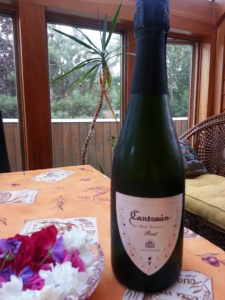
Spain has extensive production of quality sparkling wine under the Cava appellation, but such wines are usually made from blends of Macabeo, Parellada, and Xarel-lo. The Cantosán Brut (NLC $20.79) comes from Rueda, where Verdejo is king of the whites, and is labelled as D.O. Rueda rather than as Cava. Verdejo from Rueda was once a sherry-like oxidized wine as the variety seems particularly susceptible to oxidation. Night time harvesting in cooler temperatures and controlled temperature fermentation have reborn Rueda wines as fresh, full-bodied, and pleasingly aromatic.
The Cantosan Brut was indeed fresh, and refreshing. Crisp acidity enhances the citrus and green fruit aromas. The soft mousse of bubbles creates a pleasant mouthfeel, with no hint of bitterness in the finish. This wine was delicious with a pasta pesto salad but would have been just as good with any sort of seafood. Score 15/Very Good.
Quick Notes
Ontario, British Columbia, and Québec have come to some sort of agreement which will allow Ontario consumers to purchase wines from the other two provinces via the LCBO online store. I’m not sure if this is what consumers have been asking for as details are scanty about pricing, wineries, etc. I have my doubts you will be paying the same, or that the winery will receive the same return, as the current practice of ordering directly from a winery. Perhaps it is a step in the right direction, at least for residents of Ontario, but only time will tell.

We enjoyed our last virtual tasting so much we had to do it again – a great excuse to pull out some wines a little more special than normal, particularly the sweets, which are rare without (real) company. And then we combine this with a chat about the wines (and other things) with our wine […]
Read More
Steve Delaney
July 31, 2016
Spain
No Comment