

A small group of Opimian members, all of us retired directors, recently engaged in a custom wine tour of the Dalmatian coast of Croatia. The tour combined the usual historical, cultural, and natural activities with a concentration on local wine and food. It was a wonderful time by every measure, but this report will focus on the wine aspects.
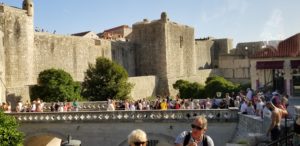
Vines were probably cultivated in Illyria (western Balkans) in ancient times even before the arrival of the Greeks and their wine-making prowess in the 5th Century BC. Wine was a major export of the area during Roman times and right through to the 19th Century when the region was a major supplier of the Austro-Hungarian Empire.
When phylloxera destroyed the vineyards of France and Germany and marched across much of Europe, places such as the islands of Dalmatia were missed for a while, creating a major market opportunity. The island of Hvar in particular was given over almost entirely to wine production. When the pest eventually arrived in Hvar the industry and wine-making were destroyed. Emigration of Croatian wine makers helped spark wine production in many new world regions – the first New Zealand wine makers were from Croatia!
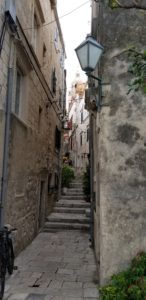
Croatian wine production was slow to recover, and was further hampered in its main Austro-Hungarian market by competition from Italian imports which had been freed from import taxes. Later, under communism, private ownership of vineyards and production of wine was discouraged in favour of cooperatives, and emphasis was on quantity rather than quality.
The return to private ownership following Croatian independence has seen an emergence of a new wine industry more conscious of quality and based on small and family-operated enterprises. Many of the wineries we visited sold all their wine within Croatia, while others had a small percentage sold elsewhere in Europe, and only one or two went further afield.
Croatian has three wine-growing regions – two inland regions, and the coastal region stretching from Istria in the north to below Dubrovnik in the south and including all the Dalmatian islands. Our tour took us to the southern half of the coastal region, including the islands of Hvar and Korcula.
Although “international” varieties are grown in Croatia, especially in the continental regions, the country is blessed with a wide range of indigenous grape varieties. I call it a blessing because I am always interested in finding and appreciating different grapes and different wines. On the other hand, it can be a challenge to market internationally wines made from little-known names which look practically unpronounceable to our eyes.
Most of the country’s red wine is grown in the coastal region, but there are many important white wines from the area as well – a requirement when dining on the large variety of seafood available in Dalmatia. At dinners and wineries we were able to sample wines from grapes such as Grk, Debit, Pošip, Graševina, Kujunduša, and Bogdanuša. We also had a sweet wine which tasted of cherries and caramel made from raisined Maraština (also known as Rukatac) grapes.
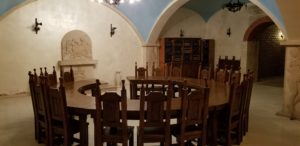
Pošip is originally from Korcula but seemed to be one of the more common white wines along the coast. The best example for me was from Matuško winery on the Pelješac peninsula showing abundant tropical fruit aromas of apricots, peaches, and bananas supported by juicy acidity. A lovely Bogdanuša wine from Vina Caric in Vrboska on Hvar had a similar nature but with more citrus and mineral notes. The Paradox Wine and Cheese Bar in Split (recommended) provided the Kujunduša which reminded me of Vermentino but with a mineral and sage edge.
When it comes to red wine, it was obvious that Plavac Mali is the most important red grape as it was everywhere. We did get one wine which was a blend of Babic, Lasina, and Plavina at Bibich winery outside Skradin, and Paradox provided samples of a wine from the Istrian grape Teran as well as a 100% Babic. There were also the usual Cabs, Syrahs, and Merlots, sometimes blended with Croatian varieties. With these exceptions, we got to know Plavac Mali quite well!
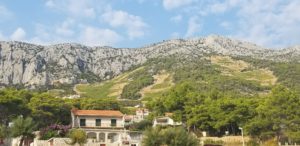
Plavac ripens unevenly so it requires a lot of sun for extended periods. The coastal vineyards are ideally suited to this requirement with more than 2,000 hours of sunshine per year. The best vineyards are planted on very steep, sea-facing slopes so they are tilted towards the sun and gain reflected light from the sea. Dingac is a specific appellation with such a configuration consisting of 7 kilometers on the coast of the Pelješac peninsula and you will find some wines with just this name on the label rather than the grape.
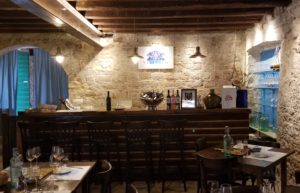
The best examples of wines from this grape are rich and savoury with flavours of plums, blackberries, and black cherry; spice and herb accents; and supportive but smooth tannins. My favourites came from Caric and Matuško, already mentioned, and from Vina Tomic in Jelsa on Hvar, and Zlatan Otok winery in Sveta Nedjelja, also on Hvar.
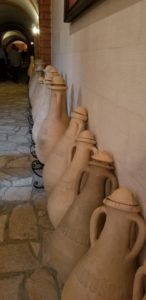
Our trip also introduced us to a couple of new, or maybe not so new, wine-making techniques. Based on wines recovered from shipwrecks, some wineries have been making sparkling wines “underwater”. The bottles are placed in cages in the ocean and the motions of the sea are used to concentrate the sediment in the neck for removal. Wineries are also sealing wine in amphora and aging them either in the ground, or in the sea. Tasting such wines will have to wait for another trip.
One grape that I do not recall tasting on the trip was the Tribidrag, also know as Crljenak Kaštelanski, Primitivo, or Zinfandel! DNA evidence has proven that the well-known American grape originated in Croatia and was known as Tribidrag as far back as the 15th Century. Maybe I will get to taste of this grape in its homeland on that future trip!


We enjoyed our last virtual tasting so much we had to do it again – a great excuse to pull out some wines a little more special than normal, particularly the sweets, which are rare without (real) company. And then we combine this with a chat about the wines (and other things) with our wine […]
Read More
We had been interested in setting a date for a dinner and tasting with our two close-by friends, but it was derailed by the recent omicron surge! Instead, we arranged to dine separately, but using the same wine selection, and then connect on Zoom over the dessert wine and discuss the wines, and the match […]
Read More
Wonderful descriptions Steve!