

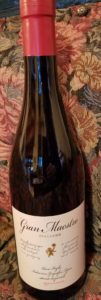
France seems to have been a regular feature during the last interval, but a red wine from Puglia in Italy is first up. Gran Maestro Rosso 2015, IGT Puglia (NLC $19.98) is a blend of Italy’s main grape Sangiovese, and Puglia’s best known grape Primitivo.
What makes this wine a little unusual is that the grapes have been partially dried before being crushed and fermented into wine. The drying process intensifies colour and flavours by reducing the water content of the grapes. But drying also modifies the chemistry of the grapes, introducing additional aromatics and smoothing the mouth-feel and tannins. Appassimento grapes were typically dried on straw mats – indoors, but that has largely been replaced by specially built drying rooms.
The process has been used around the Mediterranean for centuries. It is the same process used to make such wines as Amarone, and the sweet Ben Ryé from Pantelleria. It is even used at The Foreign Affair winery in Niagara to produce Canadian wines in the same style.
Gran Maestro is a rich and luscious wine with mature red fruit and some fruitcake aromas. There is only a touch of raisiny flavour. It makes quite an affordable alternative to Amarone. Score: 16/Very Good.

There are just a handful of the Villa Huesgen Riesling By the Glass 2016 (NLC $22.61) left over from Wine Fest. From the famous Mosel wine region of Germany, it is made in a dry style – trocken – with just enough sugar to take the edge off the vibrant, juicy acidity. The wine is medium-light in body with lime-citrus and mineral aromatics, and some finish. A good example for the region. Score: 15.5/Very Good.
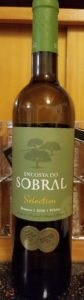
A few Opimian wines graced our table recently, including Domaine do Sobral Selection Branco 2016, DO Tejo, Portugal. The wine is a combination of Arinto, Malvasia, and Fernão Pires, with partial oak aging. The primary aroma is lemon-citrus, supported by a flowery element. Fresh fruit flavours, almost a fruit cocktail, fill the mouth, accented by good acidity.
Château de Sours is no longer an Opimian supplier (they have been bought by the owner of the the Alibaba ecommerce site), but I still have a few whites in the cellar, including the 2014 Blanc, AOC Bordeaux. The aromatics are highlighted by touches of grass, thistle, and gooseberry, and matched by juicy, thirst-quenching acidity. I will miss these when they are all gone!
Another Opimian white was the Roceno Grecanico 2016, Terre Sicialiane IGP, Italy. It showed pale-gold, with an interesting combination of lemon and a faint thyme aroma. Another solid white dinner wine.
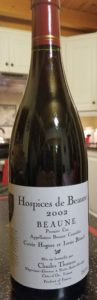
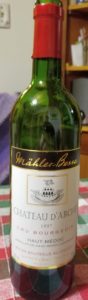
Two more treats purchased many years ago also made it to the table – a Bordeaux and a Burgundy. I hadn’t realized how good the 2002 vintage had been in Burgundy, as shown by the Beaune 2002, Cuvée Hugues et Louis Bétaut. This wine had ripe dark cherry fruit, good structure, and a lingering finish. A slightly older wine showed the value of allowing some red wines to develop with age – if you like the style, of course. The 1997 Château d’Arche, Cru Bourgeois, AOC Haut-Médoc had fully developed tertiary flavours of over-wintered red berries and lead pencil, supported by smooth, silky tannins.


The local chapter of the Opimian Society recently hosted an interesting version of a blind wine-tasting. We were served five wines from France, representing various regions, vintages, grapes, and producers. We were given full access to each of the five bottles to understand what was in each wine. These wines were served paired with an unknown wine (wines pictured at top). The object of the tasting was to try to match what was common and identify the differences between the known wine and the blind wine.
Even with so much information, it remained a challenge to identify each of the blind wines. The approach certainly did serve to focus attention on specific components of each of the wines and therefore develop your appreciation for subtle components in your glass.
———-
The NLC will be holding one of its country-based wine tasting events on April 7th at the Delta hotel, featuring wines from Australia and New Zealand. Entry to the Down Under Wine Show is $62 (plus tax and the usual exorbitant Mile One fees) and includes cheese and bread, a free bottle of wine with purchase, and a $10 taxi voucher.

We enjoyed our last virtual tasting so much we had to do it again – a great excuse to pull out some wines a little more special than normal, particularly the sweets, which are rare without (real) company. And then we combine this with a chat about the wines (and other things) with our wine […]
Read More
Steve Delaney
February 22, 2018
France, Germany, Italy, Portugal
No Comment