

It’s been two weeks of a variety of wines, highlighted by special tasting dinners each weekend! Bordeaux and Italy have been the main features, although it has been a bit of a world tour with most major exporting countries represented. Supper wines have been split between Opimian selections and a couple of Last Chance and Wine Fest labels from the NLC.
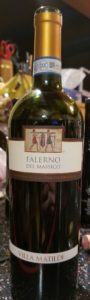
If you are looking for something a little different from Italy, there are a handful of the Villa Matilde Falerno del Massico Rosso DOC 2010 available at the Blackmarsh Road NLC store, marked down to $22.34. This wine is a blend of Aglianico and Piedirosso grapes, both of which are rarely found here.
Aglianico was originally imported into southern Italy from Greece, and in the Roman era was the foundation of Falernian wine – the most famous wine of the Roman empire. It produces full-bodied dark red wines of good structure (tannin and acidity). Piedirosso is often used as a blending grape with Aglianico to add some softness and complexity while maintaining body and colour. My wine had a weighty aroma of black cherry and currants, dried fruit, and something akin to leather, or meat. It was full-bodied with young tannins. Score: 16/Very Good.
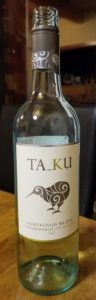
Ta_Ku Sauvignon Blanc 2016 from New Zealand (NLC $19.98) is a left over from Wine Fest available in a few stores. For an NZ Sauv Blanc the nose is a little restrained – perhaps a good thing! – showing lime citrus and minerality rather than grassy aromas. Score: 15.5/Very Good. My other Wine Fest wine is no longer available, the Crusher Petit Sirah 2014 from California. Huge ripe fruit aromas of black and red brambles and currants, with moderate tannins, suggests this might be a good BBQ wine. There are a few other examples of Petit Sirah available at the NLC.
These are my notes on a number of Opimian wines enjoyed over the last two weeks:
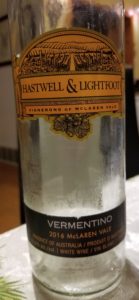
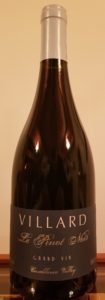

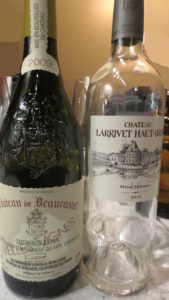
I was lucky enough to be invited to spectacular wine tasting dinners each of the last two weekends. Besides excellent cuisine, suitably matched with the wine selections, we enjoyed sips of some very fine wines – some of them pictured at the top of this page, and below.
Both of these tastings were conducted “blind” so that participants were tasked with naming the main grapes, country of origin, producer, and vintage of each glass presented. Even the best experts find such tastings to be incredibly difficult, and getting the producer and vintage correct is a rare event. The speculation and banter around what’s in each glass makes up a great deal of the atmosphere at such events.
Blind tastings are wonderful learning opportunities because you have to concentrate on what you see, smell, and taste rather than what you read on a wine label. Your senses can become more discerning over time, and you will begin to appreciate the subtle complexities you can find in well made wines. You don’t need dinner events such as these for blind tastings, you can do them at home with just one friend, or a few more. Give it a try sometime!



We enjoyed our last virtual tasting so much we had to do it again – a great excuse to pull out some wines a little more special than normal, particularly the sweets, which are rare without (real) company. And then we combine this with a chat about the wines (and other things) with our wine […]
Read More
We had been interested in setting a date for a dinner and tasting with our two close-by friends, but it was derailed by the recent omicron surge! Instead, we arranged to dine separately, but using the same wine selection, and then connect on Zoom over the dessert wine and discuss the wines, and the match […]
Read More
Steve Delaney
February 12, 2018
Australia, Chile, France, Italy, New Zealand, South Africa, Spain, USA
No Comment